
Garland County Arrest Warrants Explained
Arkansas Code section 16-81-104 lets a circuit judge, district judge, or magistrate sign an arrest warrant. First, though, the judicial officer must be satisfied that reasonable grounds support the charge. Personal knowledge counts. So does information given under oath. That probable-cause review is what separates a real arrest warrant from a bare allegation or a hit on an online case search. In Garland County, a felony usually belongs to the Eighteenth East Circuit Court, while District Court handles misdemeanors, traffic and ordinance cases, plus preliminary felony matters. The issuing court matters twice over: its clerk holds the record, and its judge controls later case action. Once signed, a Garland County warrant can be executed by the sheriff, city police, a constable, Arkansas State Police, or another authorized officer.
Garland County Probable-Cause Path
In Garland County the process starts when an officer, prosecutor, or other authorized requester presents a complaint, an affidavit, or sworn information. The judge or magistrate reviews the facts. If the legal standard is met, the warrant gets signed. The Circuit Clerk or District Court clerk then files or enters the event, and an assigned law-enforcement agency receives it for service. After service come booking and an appearance before a judicial officer, as the law requires. Bond or release terms depend on the case. The officer returns service information to the clerk, and later docket entries may show service, bond, recall, disposition, or transfer into the criminal case. The official Arkansas Code search opens the governing statutes.
Inside a Garland County Arrest Warrant
A warrant record in Garland County can name both the order and the case it supports. What fields appear depends on the court. It also depends on whether the warrant began before any criminal file opened. Arkansas procedure uses an AW docket when no criminal case yet exists.
| Warrant or AW number | A clerk-assigned identifier such as AW docket, not a promised county format. |
|---|---|
| Subject | The person named by the judicial order. |
| Charge | Offense, statute, and classification recorded by the court. |
| Issuing authority | Court, division, judge, or magistrate. |
| Bond direction | Case-specific cash, surety, professional, or no-bond entry when recorded. |
| Dates and status | Issue, service, return, recall, or later case transfer events. |
Garland County publishes no general bond schedule. So never guess an amount from the charge alone.
Garland County AW Docket Reading
Search ARCourts is a public case portal, and Garland County dockets live there. It is not a statewide arrest-warrant list. Still, a search can surface entries like ARREST WARRANT ISSUED, WARRANT SERVED, bond, forfeiture, or other docket activity. Start with a last name. Then narrow things down with a first or middle name, date of birth, filing date, case group, or party type. Circuit group 11 covers criminal cases. A direct case search needs the exact case ID, and the official sample view shows how a case header and docket columns are laid out.
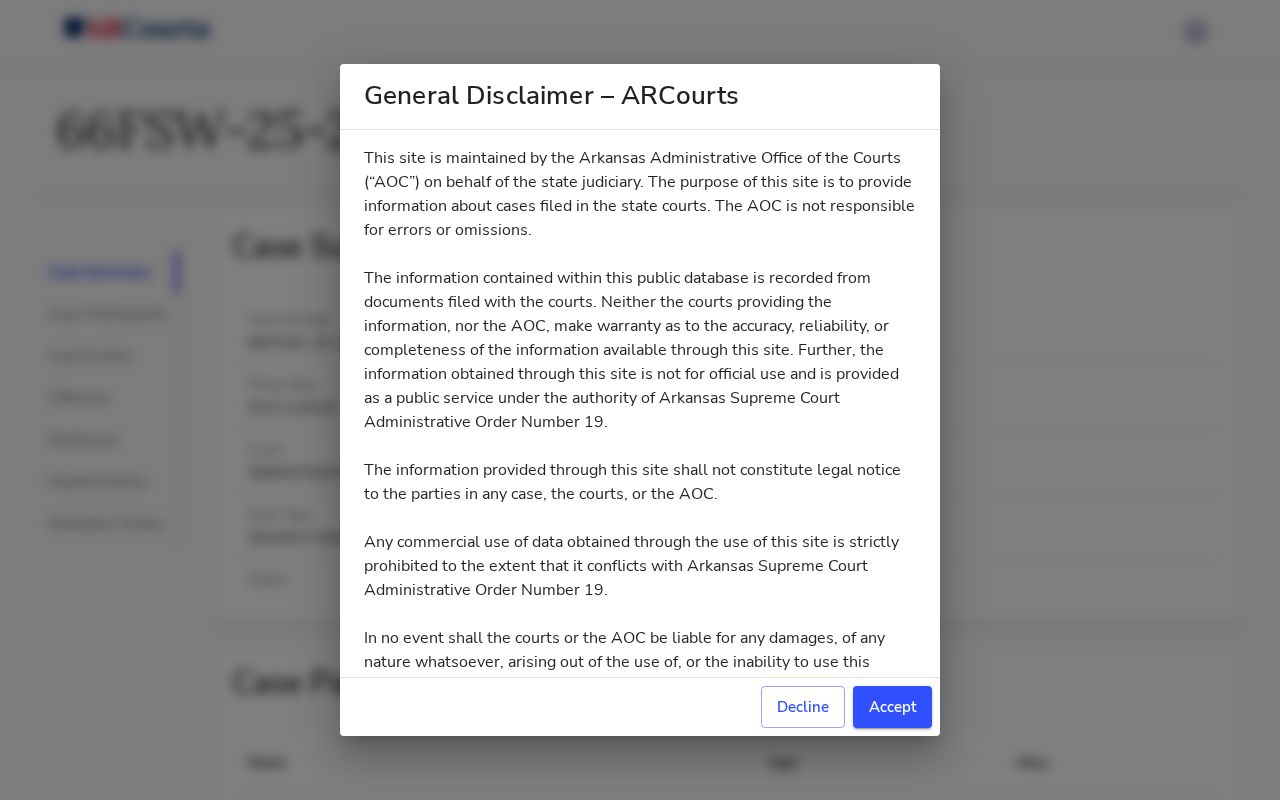
That layout helps a Garland County reader spot the court and event date without borrowing a sample person's details.
Serving Arrest Warrants in Garland County
Any Arkansas law-enforcement officer may execute a warrant. Locally, the Garland County Sheriff's Office carries the county service role, and the Circuit Clerk says circuit-authorized warrants are prepared for sheriff delivery. Hot Springs Police patrols continuously. With state photo identification, it will check a person's own active arrest warrant in person. It will not disclose another person's status that way. Garland County lists constables for Hale, Hot Springs, Lake Hamilton, and Whittington townships but publishes no assignment matrix. Arkansas State Police and federal task-force partners may also act within their authority. Do not assume which agency holds one warrant. Call the issuing clerk or use the Sheriff's staff directory to confirm.
Garland County Service and Return
Service is just one stage. The arresting officer books the person when required, the court addresses release or bond, and the executed warrant goes back to the issuing clerk. A returned warrant and affidavit are generally public. They stay closed only if sealed for good cause. Before return, remote access can be limited. The official docket example shows the event labels and status columns.
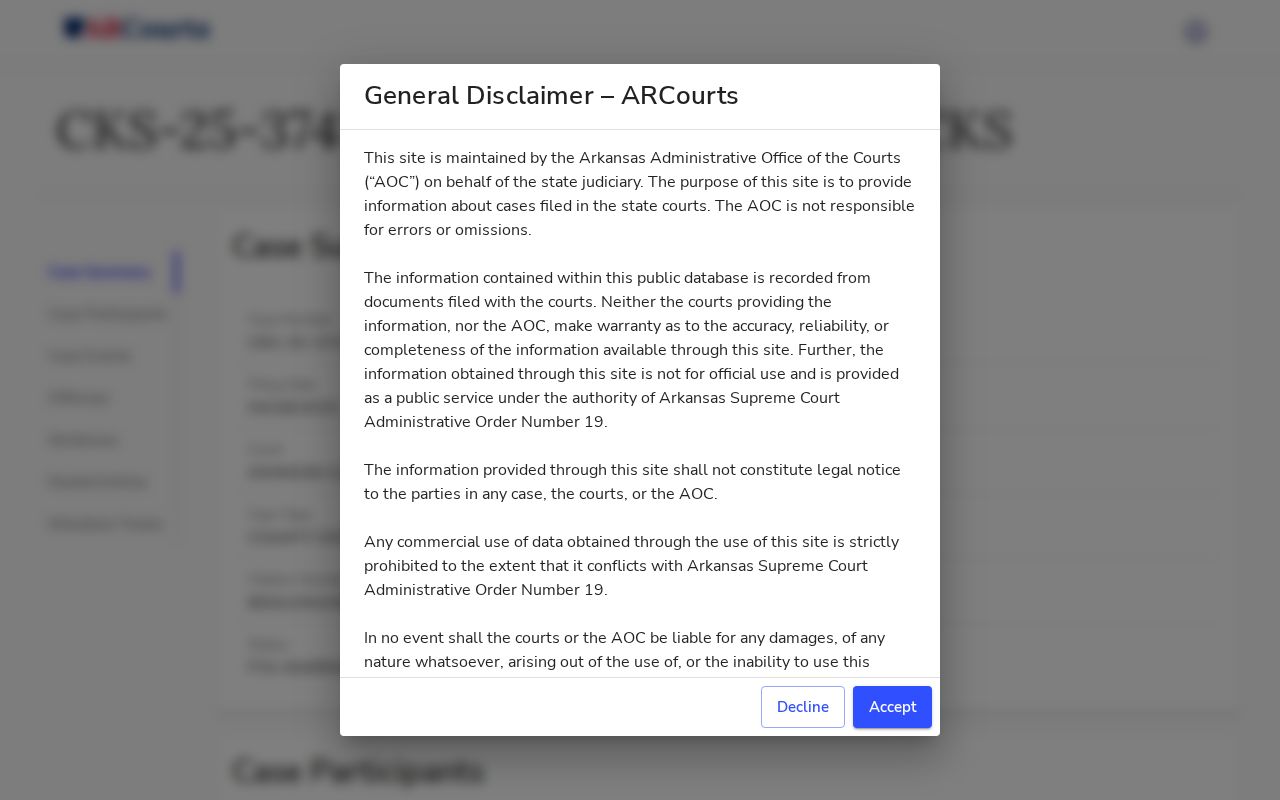
Keep the issue event distinct from service, return, and later court action in Garland County. A stale screen can lag behind a signed recall or an agency update.
Arrest, Summons, and Bench Warrants Compared
Each tool demands a different response. An arrest warrant authorizes custody on probable cause. A summons orders a person to appear, without any arrest order attached. A Garland County bench warrant usually follows a missed duty in a case already open.
| Process | Basis | Practical response |
|---|---|---|
| Arrest warrant | Sworn probable cause | Counsel, planned surrender, booking, bond |
| Summons | Court directs voluntary appearance | Appear on the stated date |
| Bench warrant | Missed setting, payment, or order | Contact issuing court about recall or reset |
Ignore a summons and new process can follow. For missed-court detail, try the Garland County bench warrant search.
Garland County Bond Has No Schedule
Garland County posts no general bond schedule. The amount and conditions come from the order in each case. A docket may show cash, professional or surety, no-bond, payment-plan, or forfeiture entries, but the order itself controls. Paying a fine is not the same as posting bond. A professional bond is a licensed surety's promise, while cash means depositing what the court ordered. Ask the clerk or the jail for the exact case, bond type, and amount. Ask whether surrender must come first and when a judge reviews release. The Detention Center sits at 3564 Albert Pike Road. Reception answers at 501-651-7801 and booking at 501-651-7833, and since no office here publishes a walk-in-surrender checklist or bond-window schedule, call before you travel.
Key point: Garland County arrest warrant bond terms must come from the live case, clerk, or jail, never a generic estimate.
If There Is an Arrest Warrant for You
Don't make an unplanned counter visit. Confirm the court and the warrant first. In Garland County, an attorney can contact the issuing court, arrange a walk-through or surrender, and coordinate bond where permitted. A motion to recall or quash may fit some circumstances, though the county publishes no form or fee for one, and the court's action depends on the case.
- Collect the case number, charge, court, and warrant date.
- Have counsel confirm whether the warrant is active and sealed details can be discussed.
- Ask about surrender, booking, bond, and the next hearing.
- Follow the exact court and law-enforcement directions.
- Keep release papers and calendar the underlying case.
Important: Do not ignore an active Garland County arrest warrant; get legal advice before arranging an appearance or surrender.
Garland County Public-Access Boundaries
Sealing is the main limit here. Unless a judge seals a file, returned arrest-warrant material stays open to the public. A sealed indictment can remain nonpublic until arrest or unsealing, and juvenile files are generally confidential. Search ARCourts itself warns that its data is not official legal notice and may be incomplete. The Garland County sheriff posts no warrant search and no complete public arrest-warrant list. For a circuit criminal record, contact the Circuit Clerk at 501-622-3630. District Court answers at 501-321-6765. Sheriff's Records is 501-622-3676, the main sheriff number is 501-622-3660, and a focused Garland County request through NextRequest should omit birth dates, driver's-license numbers, Social Security numbers, and phone numbers.
Garland County Arrest-to-Court Route
An arrest closes nothing. The case keeps moving. After service, the person may be taken to the Garland County Detention Center for booking and then brought before a judicial officer as required. The court takes up bond or release there and sets the next case event. The officer's return tells the clerk how the warrant was executed. The docket then connects the old AW process to the criminal cause. Keep the release papers and the next court date. Walking out of custody does not resolve the charge. Garland County Public Defender representation depends on a judge's indigency finding. The county's own office says it handles qualifying misdemeanors, felonies, probation violations, and extradition hearings. It is not a private advice line before arrest. It also leaves out fine-only infractions and child-support, custody, and DHS proceedings. Anyone wanting pre-arrest coordination may need private counsel, since no county office promises a walk-through, pre-arrest bond, or same-day release in every arrest-warrant case.